
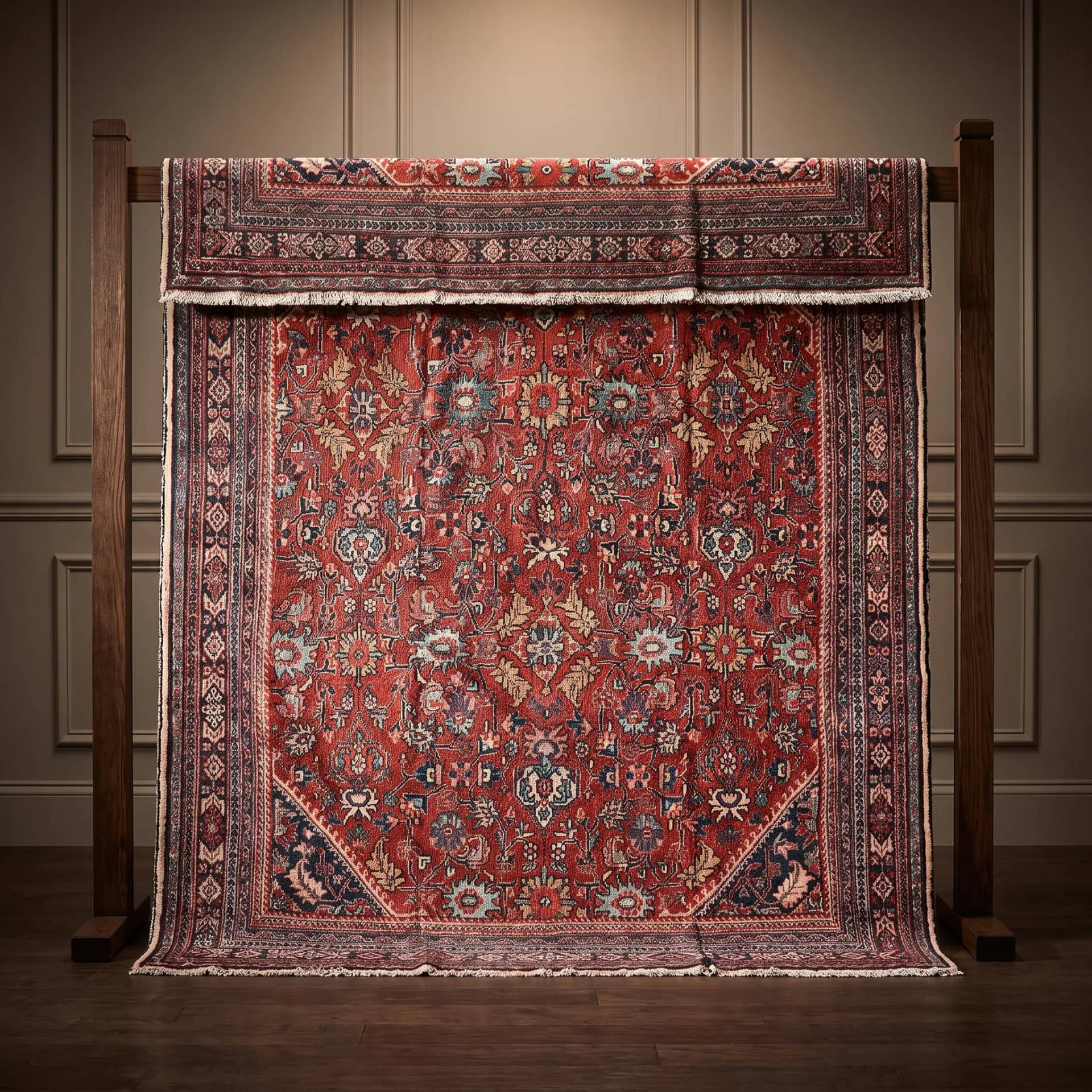
Mahal Rugs
Mahal rugs — from the Mahallat district of west-central Persia — are the decorator's Persian rug: room-size, softly colored, casually drawn, and more relaxed than their formal city cousins. That once made them the affordable grade; today it makes them sought after. Austin Auction Gallery has sold a dozen, topped by a 15-foot Mahal at $2,750.
What it's worth
Typical 20th-century Mahals bring $250–$1,000 at our sales, and size and drawing quality push higher: a hand-tied Persian Mahal at 15' x 10'7" sold for $2,750. Pieces with genuinely open, large-scale drawing and soft color — the ones that read 'Sultanabad' — can bring several times that in the national decorator market. Even worn examples sell if the color is good; Mahals tolerate honest wear better than formal rugs.
Our sold results
Auction results for Mahal Rugs
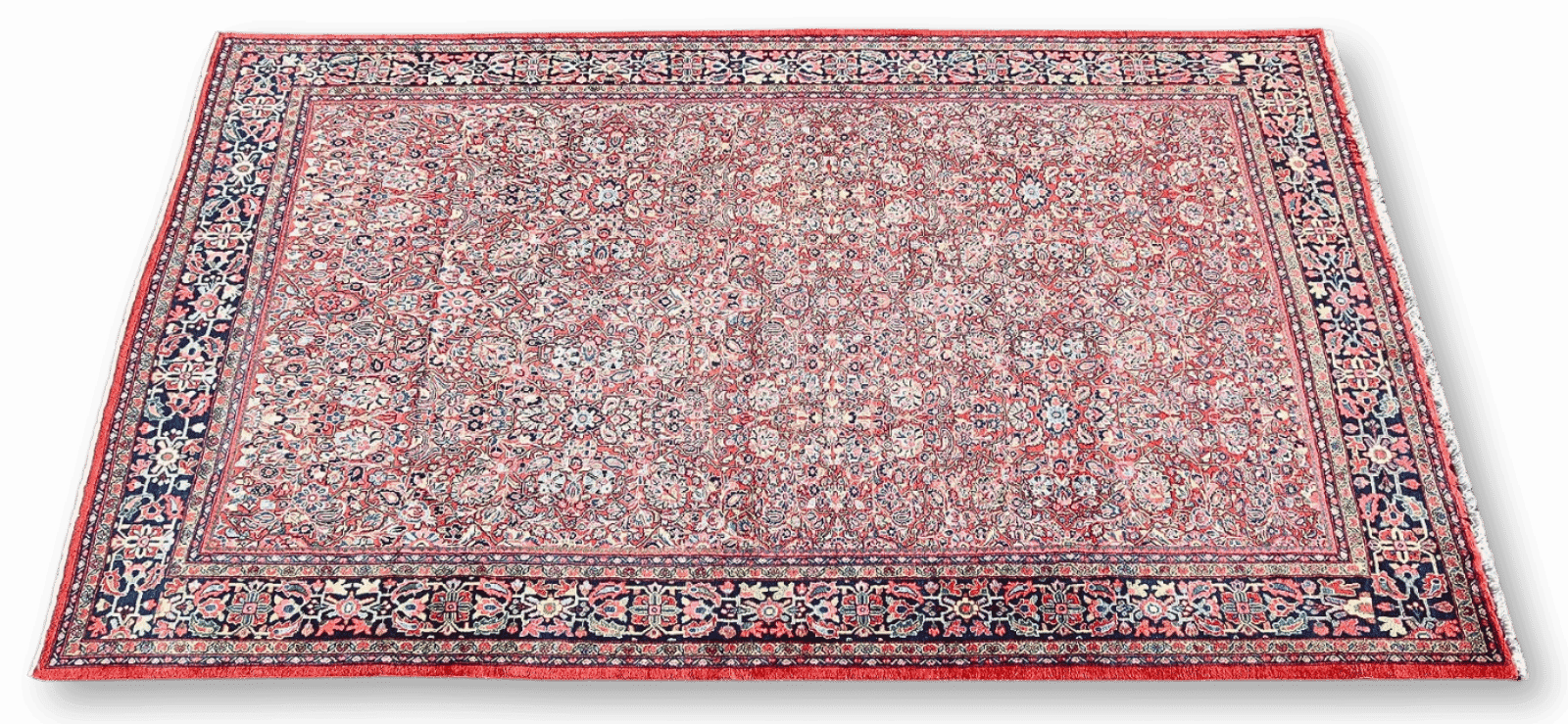
No results sold in this period—try a wider range.
Overview & history
Mahal production was the village counterpart to the fine city weaving of nearby Sultanabad (Arak) — coarser in knot count, larger in scale, woven for export from the late 19th century onward. The drawing is what collectors and designers now prize: all-over herati, vine-and-palmette, and open medallion designs rendered loosely and generously, in rust, soft red, ivory, and denim blue, without the tight formality of a Kashan or Tabriz. The best antique grade of the region traded under the 'Sultanabad' name (and, at the top, the Ziegler & Co. commissions now worth fortunes); 'Mahal' covered the broader commercial output. That hierarchy still holds: the more spacious and softly colored the piece, the harder decorators compete for it. Room sizes and oversizes dominate the format.
Identifying & marks
Expect a coarse-to-medium weave with symmetric or asymmetric knots on cotton, a floppy, blanket-like handle (very different from stiff Heriz or dense Sarouk), and relaxed, large-scale drawing with visible abrash. The palette leans rust, madder, ivory, and mid-blue. Distinguishing Mahal from Sultanabad grade is a judgment call about fineness and drawing quality — precisely the call our specialists make before estimating.
Frequently asked
What is my Mahal rug worth?
Typical 20th-century Mahals bring $250–$1,000 at our sales, with large, well-drawn examples higher — a 15-foot Persian Mahal brought $2,750. Spacious drawing and soft color are what push a Mahal up; decorators compete for the airy, large-scale pieces.
What is the difference between a Mahal and a Sultanabad?
They come from the same west-Persian region; 'Sultanabad' historically labeled the finer grade (topped by the Ziegler & Co. commissions) and 'Mahal' the broader commercial output. Grading a piece between them is a judgment about fineness, drawing, and color — a call worth having a specialist make, since the value difference is substantial.
My Mahal is worn. Is it still worth selling?
Very possibly. Mahals tolerate honest wear better than formal city rugs — buyers of the category prize color and drawing over perfect pile. Send photos before writing it off; low, even wear on a well-colored Mahal is routinely sellable.
What could your Mahal Rugs bring at auction?
Our specialists provide free, no-obligation auction estimates. Send a few photos and we'll tell you what it could bring.