
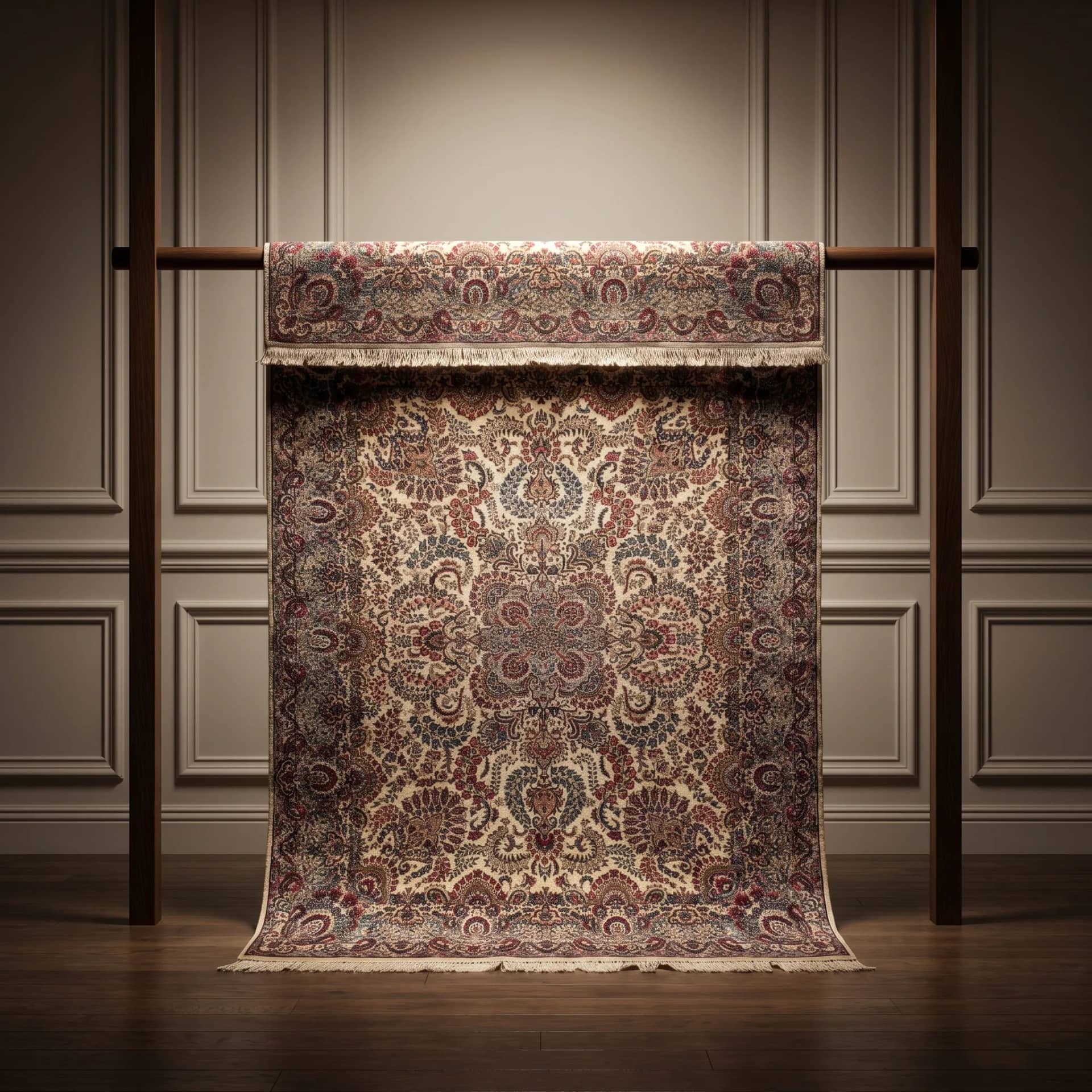
Kerman Rugs
Kerman rugs are the soft-spoken aristocrats of the Persian trade — pastel palettes, elegant floral drawing, and the famous Lavar (Ravar) grade at the top of the line. American buyers loved them in the mid-20th century, which is why they turn up constantly in Texas estates, and Austin Auction Gallery has sold Kermans up to a 21-foot example at $1,100.
What it's worth
Standard 20th-century Kermans bring $400–$800 at our sales, with size adding value: a 21'5" x 10'2" estate Kerman brought $1,100 in May 2026, and a 13' x 9'7" Ravar wool-pile example sold for $850. Lavar/Ravar pieces with age and condition, and anything approaching the antique 'vase carpet' tradition, deserve specialist review — nationally those can bring five figures.
Overview & history
Kerman, in the high desert of southeastern Persia, has woven carpets since Safavid times, and its 'vase carpets' are among the most celebrated in carpet history. The 20th-century export Kerman is a different, gentler creature: soft ivory, rose, and robin's-egg grounds, graceful open-field or medallion compositions, detailed floral borders, and a plush, velvety pile. Rugs from Ravar, a town north of the city — corrupted in the trade to 'Lavar Kerman' — represent the finest grade, with more delicate drawing and finer knotting. Mid-century American Kermans (broad open fields with sculpted floral borders) furnished formal rooms across the country. The pastel formality that made them popular then softens demand today, but large, fine, and Lavar examples still perform.
Identifying & marks
Kermans use asymmetric knots on a cotton foundation with a distinctive weave structure: three weft passes between knot rows, giving the back a fine, slightly ribbed look unique among Persian city rugs. The palette is the fastest tell — pastels, ivories, and soft rose rarely seen elsewhere. Lavar/Ravar grade shows finer knotting, thinner and more supple handle, and highly detailed, airy drawing. A woven signature or 'Kerman-Ravar' cartouche is worth noting.
Frequently asked
What is my Kerman rug worth?
Standard 20th-century Kermans bring $400–$850 at our sales, with oversized examples higher — a 21-foot estate Kerman brought $1,100. Fine Lavar/Ravar grade pieces and true antiques can bring several times that nationally.
What is a Lavar Kerman?
A trade corruption of 'Ravar,' a town north of Kerman city whose workshops wove the finest grade of the region — thinner, more finely knotted, more delicately drawn. If your Kerman is unusually fine and supple with airy, detailed drawing, it may grade as Lavar/Ravar and is worth a specialist look.
Why is my Kerman so much softer in color than other Persian rugs?
Pastels are Kerman's signature — ivory, rose, celadon, and robin's-egg blue palettes that no other Persian weaving center used so freely. Mid-century American buyers loved the look, which is why Kermans are common in Texas estates.
What could your Kerman Rugs bring at auction?
Our specialists provide free, no-obligation auction estimates. Send a few photos and we'll tell you what it could bring.