
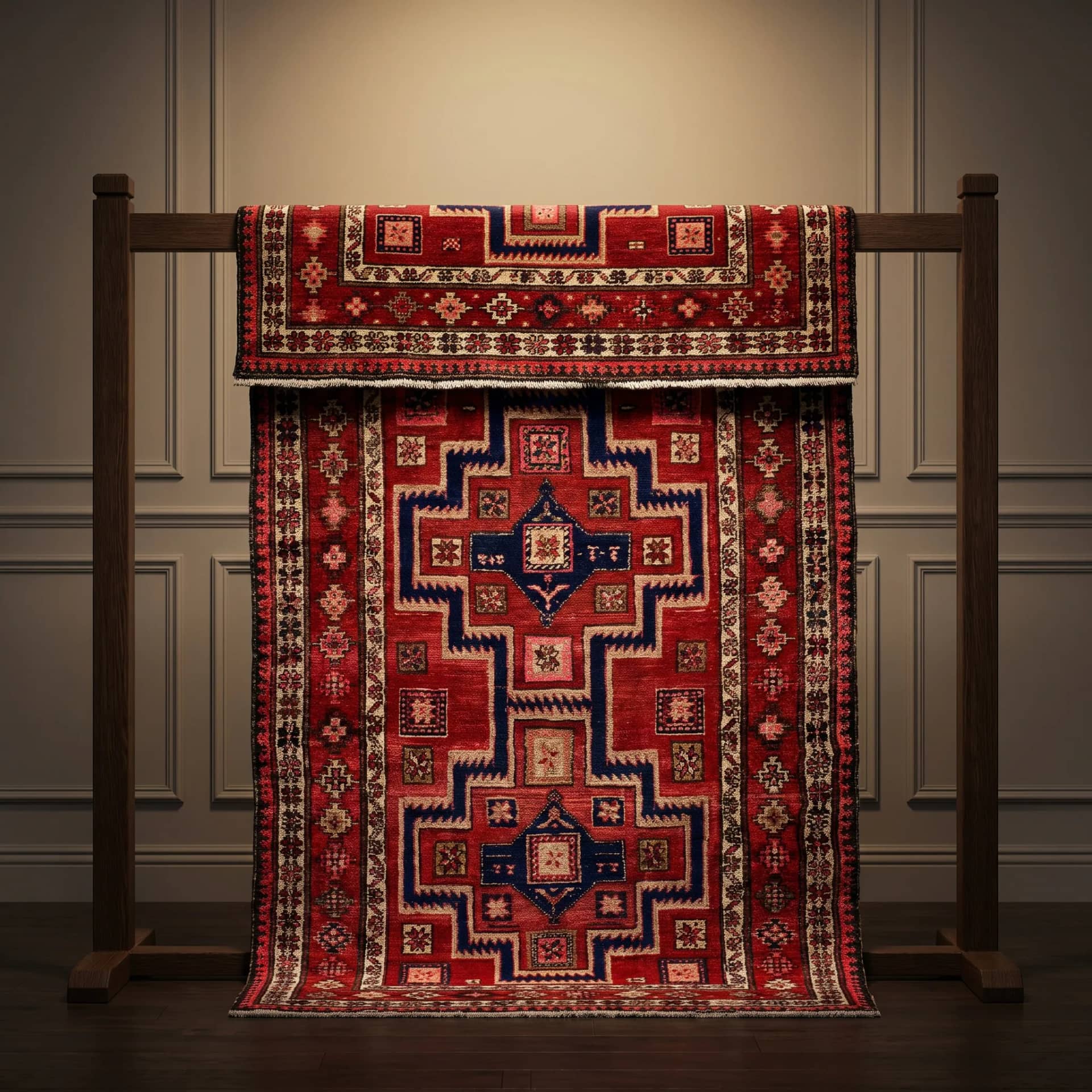
Hamadan Rugs
Hamadan is the workhorse of Persian weaving — hundreds of villages around the ancient city produced sturdy, single-wefted rugs and the runners that line American hallways to this day. They are the most common Persian rugs in Texas estates, and Austin Auction Gallery sells them steadily, with runners leading the results.
What it's worth
Most Hamadan rugs bring $175–$550 at our sales: an 11-foot Persian Hamadan runner sold for $550 in 2025, with typical scatter and small room sizes at $175–$375. Older single-village pieces with camel grounds or unusual drawing can do better, and certain named villages (Malayer, for instance, sometimes grouped with Hamadan) reach a collector market. Condition is the main variable at this price level — clean, intact examples sell reliably.
Overview & history
The Hamadan region — one of the oldest continuously inhabited areas on earth — is not one weaving tradition but hundreds: each village around the market city wove its own geometric medallions, anchor pendants, and herati variations, all funneled through Hamadan's bazaar and sold under its name. The construction is the unifying trait: a single weft pass between knot rows (most Persian rugs use two), which gives the back a distinctive checkerboard-like grain and the rug a firm, hard-wearing body. Camel-hair-toned grounds appear in older pieces. Runners are a Hamadan specialty and remain the most requested format. These are unpretentious, durable rugs — the entry point of the Persian market and an honest one.
Identifying & marks
Flip a corner: the single-wefted back with its distinctive alternating knot-and-weft grain is the Hamadan signature. Symmetric knots, cotton foundation (older pieces sometimes wool), geometric village drawing, and a stiff, heavy handle complete the picture. Runners with repeating medallions or all-over boteh are classic. Camel-hair tones and lustrous, greasy wool suggest earlier village work worth a closer look.
Frequently asked
What is my Hamadan rug worth?
Most Hamadans bring $175–$550 at auction, with runners at the top of the range — an 11-foot Hamadan runner sold with us for $550. Older single-village pieces with camel-toned grounds can do better. They are honest, entry-level Persian rugs and sell reliably in clean condition.
How do I know my rug is a Hamadan?
Flip a corner: Hamadans are single-wefted — one weft pass between knot rows instead of two — which gives the back a distinctive alternating, checkerboard-like grain found in almost no other Persian weaving. Add geometric village drawing and a stiff, heavy handle and you have a Hamadan.
Why are so many runners Hamadans?
The hundreds of villages in the Hamadan region specialized in long, narrow formats for their own halls and for export, and American homes absorbed them by the thousand. Runners remain the most requested Hamadan format and the most dependable sellers.
What could your Hamadan Rugs bring at auction?
Our specialists provide free, no-obligation auction estimates. Send a few photos and we'll tell you what it could bring.