
Regency
English Regency furniture — produced during and around the Prince Regent's rule (formally 1811–1820, but stylistically c. 1800–1830) — is among the most dramatic and collectible of English period styles. Dark rosewood and mahogany, brass inlay and stringing, sabre legs, and bold classical and Egyptian motifs define the look. Austin Auction Gallery sells and appraises Regency furniture.
What it's worth
Simple Regency side chairs and occasional tables typically bring $500–$2,000 per piece. Quality Regency case pieces — chiffoniers, secretaires, library bookcases — bring $2,000–$8,000 in good original condition. Exceptional documented pieces and sets of dining chairs in original condition reach considerably more. Later Edwardian and 20th-century Regency revival pieces bring less than original period examples, though quality reproductions by makers like Gillows or Edwards & Roberts have collector value of their own.
Our sold results
Auction results for Regency
 PATENT JUPE TABLE$5,000Sep 2021
 (8) REGENCY STYLE DINING CHAIRS$1,500Jan 2024
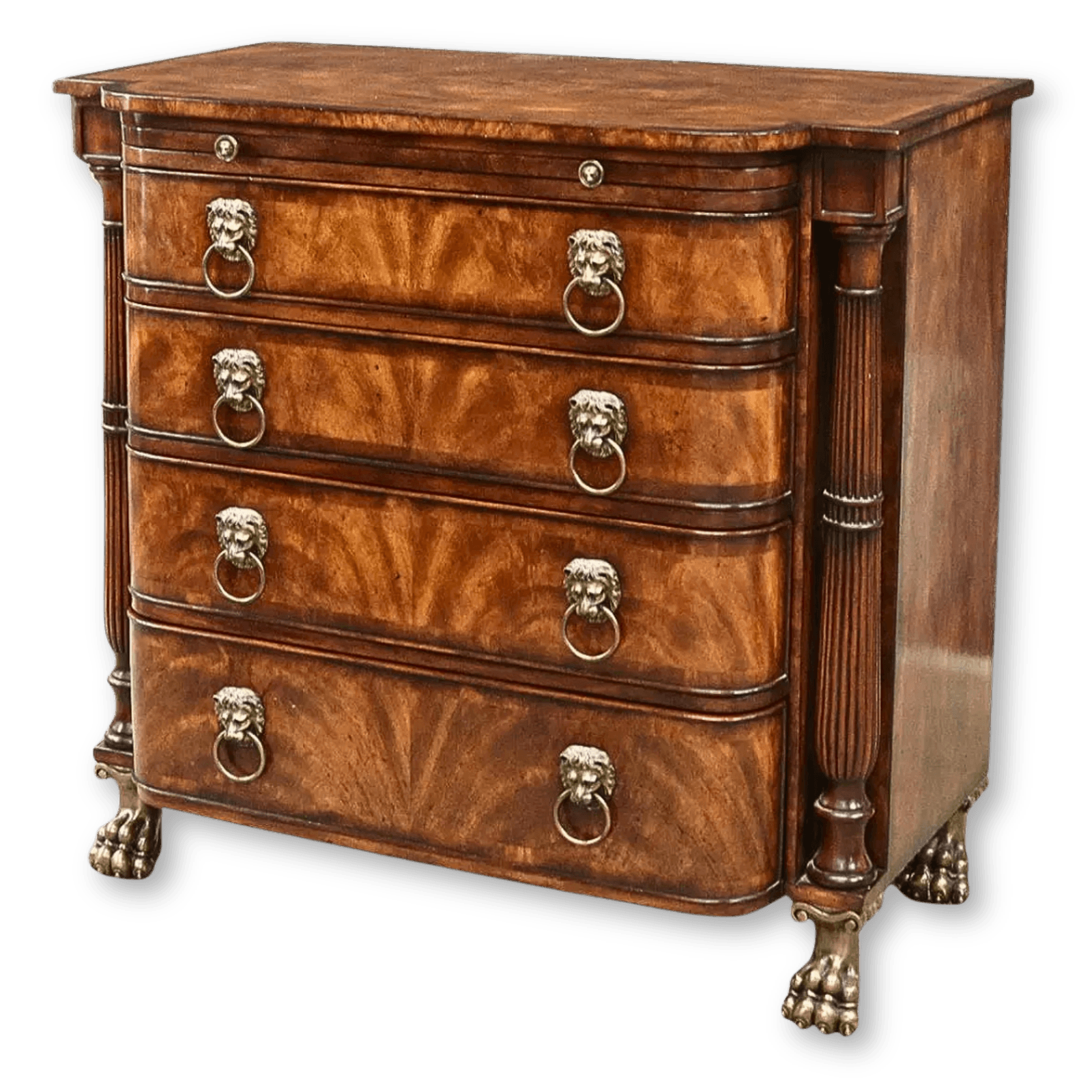 ALTHORP REGENCY STYLE CHEST$1,000Nov 2020
Showing 119 results
Auction Results
Overview & history
The Regency period takes its name from the future George IV, who served as Prince Regent from 1811 to 1820 during his father's incapacity. But the style associated with this era spans the broader c. 1800–1830 window and reflects the cultural influences of its moment: Napoleon's Egyptian campaign, the excavations at Pompeii and Herculaneum, the Greek Revival in architecture, and the fashionable exoticism of Chinoiserie. Designers like Thomas Hope and George Smith codified the style in published pattern books, and the great cabinetmakers of London — Gillows, George Oakley, and others — produced furniture of exceptional quality for aristocratic and upper-middle-class patrons. Regency furniture is characterized by its dramatic use of materials and silhouette. Dark rosewood and figured mahogany are the primary woods, often set off by brass inlay, stringing, and lion-head ring pulls. The sabre leg — curved outward at the front — replaced the straight Sheraton leg and became a Regency signature on chairs and sofas. Animal feet (brass lion-paw, carved eagle claw), Egyptian motifs (sphinxes, lotus columns), Grecian klismos chair forms, and the characteristic boulle-influenced brass and ebony inlay all signal the period. Sofa tables, card tables, chiffoniers, secretaires à abattant, and library furniture in the Regency style are staples of English country-house collections and appear regularly in Texas estate sales from families with English decorating traditions.
Identifying & marks
Period Regency furniture shows hand-cut dovetails, period-appropriate secondary woods (oak, pine), and genuine age patina on unfinished surfaces. Brass inlay should show hand-filing and slight irregularity; machine-cut brass stringing indicates later production. The dark rosewood surfaces will have genuine fading and wear patterns consistent with age. Look for maker's stamps or labels inside drawers or on the back — London makers Gillows, Oakley, and Seddon sometimes stamped their pieces. Animal-foot castings on quality pieces show fine detail; later reproductions have cruder casting.
Frequently asked
What could my Regency bring at auction?
Simple Regency side chairs and occasional tables typically bring $500–$2,000 per piece. Quality Regency case pieces — chiffoniers, secretaires, library bookcases — bring $2,000–$8,000 in good original condition. Exceptional documented pieces and sets of dining chairs in original condition reach considerably more. Later Edwardian and 20th-century Regency revival pieces bring less than original period examples, though quality reproductions by makers like Gillows or Edwards & Roberts have collector value of their own.
How do I identify Regency?
Period Regency furniture shows hand-cut dovetails, period-appropriate secondary woods (oak, pine), and genuine age patina on unfinished surfaces. Brass inlay should show hand-filing and slight irregularity; machine-cut brass stringing indicates later production. The dark rosewood surfaces will have genuine fading and wear patterns consistent with age. Look for maker's stamps or labels inside drawers or on the back — London makers Gillows, Oakley, and Seddon sometimes stamped their pieces. Animal-foot castings on quality pieces show fine detail; later reproductions have cruder casting.
How do I sell my Regency?
Austin Auction Gallery offers free, no-obligation appraisals. Send a few photos and our specialists will tell you what it could bring at auction, then handle every step from cataloging through the sale.
What could your Regency bring at auction?
Our specialists provide free, no-obligation auction estimates. Send a few photos and we'll tell you what it could bring.