
Art Deco
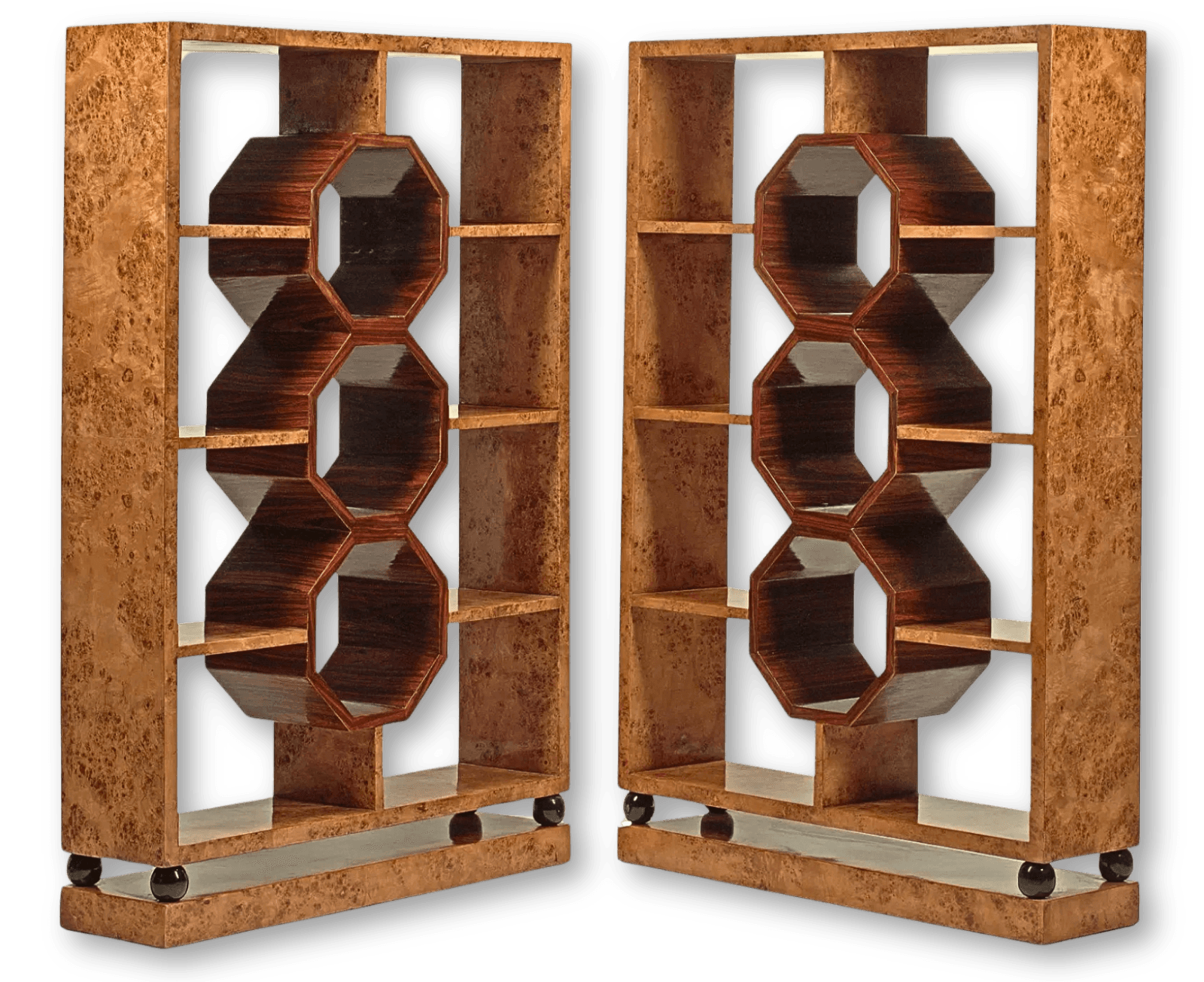
Art Deco furniture — bold, geometric, and luxuriously materialed — emerged in Paris in the 1920s and spread across Europe and America through the 1930s and 1940s. Exotic veneers, lacquer, chrome, and stepped or streamlined silhouettes define the style. High-end French pieces by named designers are the most valuable; quality American and Italian Deco production appears regularly in Texas estates. Austin Auction Gallery sells and appraises Art Deco furniture.
What it's worth
American production Art Deco pieces — bedroom suites, waterfall dressers, cocktail cabinets — typically bring $300–$2,500 depending on quality, completeness, and condition. Quality Italian Deco case pieces bring $1,000–$8,000+. High-quality French-influenced pieces by identifiable makers or designers bring $3,000–$30,000+. Signed pieces by major French designers (Ruhlmann, Leleu, Adnet) are museum-quality and can bring six figures at major auction. Condition and originality of finish are critical — Deco's lacquer and exotic veneer surfaces are costly to restore.
Our sold results
Auction results for Art Deco
 LOUIS XV STYLE ORMOLU & VERNIS-MARTIN DECORATED ART-CASE GRAND PIANO$22,000Oct 2024
 (2) FRENCH ART DECO LEATHER CLUB CHAIRS$8,000Jan 2023
 ARCHITECTURAL ART DECO MARBLE FIREPLACE MANTLE$7,000Oct 2017
Showing 67 results
Auction Results
Overview & history
Art Deco emerged from the 1925 Exposition Internationale des Arts Décoratifs et Industriels Modernes in Paris — the exhibition that gave the style its name — and represented a decisive break from Art Nouveau's organic curves in favor of bold geometry, speed, and luxury. French designers Émile-Jacques Ruhlmann, Jules Leleu, Paul Follot, and others created furniture of extraordinary craftsmanship for an elite clientele: pieces veneered in amboyna, macassar ebony, and zebrawood, with ivory and shagreen inlay, gilded bases, and a sculptural confidence that makes the best French Deco among the most collected 20th-century furniture. American Art Deco took the style in a more democratic and streamlined direction. Manufacturers including Heywood-Wakefield, Grand Rapids makers, and New York department store design studios produced Deco-inspired bedroom suites, cocktail cabinets, and living room furniture in walnut and blond veneers with chrome hardware, waterfall edges, and geometric inlay that brought the Paris look to the American middle class. Italian Deco — often in ebonized wood, lacquer, and marble — brings a bolder, more architectural quality that is well represented in Texas collections. The style appears in bar and cocktail cabinets, bedroom suites, vanities, club chairs and sofas, side tables, and case goods of every type.
Identifying & marks
Authentic 1920s–1940s Deco pieces show period-appropriate construction: hand-cut dovetails or early machine-cut joints, period hardware (often chrome or brass with geometric pulls), and genuine age patina. Exotic veneers should show consistent aging and no machine-perfect matching that would indicate modern reproduction. American production pieces often carry maker's labels inside drawers or on backs (Heywood-Wakefield, Widdicomb, Grand Rapids makers). French pieces may carry maker's plaques, foundry marks on metal elements, or stamps inside drawers. The geometric silhouette and stepped or waterfall profiles are characteristic, but these features were revived in the 1980s–2000s — age of secondary materials and hardware confirms genuine period production.
Frequently asked
What could my Art Deco bring at auction?
American production Art Deco pieces — bedroom suites, waterfall dressers, cocktail cabinets — typically bring $300–$2,500 depending on quality, completeness, and condition. Quality Italian Deco case pieces bring $1,000–$8,000+. High-quality French-influenced pieces by identifiable makers or designers bring $3,000–$30,000+. Signed pieces by major French designers (Ruhlmann, Leleu, Adnet) are museum-quality and can bring six figures at major auction. Condition and originality of finish are critical — Deco's lacquer and exotic veneer surfaces are costly to restore.
How do I identify Art Deco?
Authentic 1920s–1940s Deco pieces show period-appropriate construction: hand-cut dovetails or early machine-cut joints, period hardware (often chrome or brass with geometric pulls), and genuine age patina. Exotic veneers should show consistent aging and no machine-perfect matching that would indicate modern reproduction. American production pieces often carry maker's labels inside drawers or on backs (Heywood-Wakefield, Widdicomb, Grand Rapids makers). French pieces may carry maker's plaques, foundry marks on metal elements, or stamps inside drawers. The geometric silhouette and stepped or waterfall profiles are characteristic, but these features were revived in the 1980s–2000s — age of secondary materials and hardware confirms genuine period production.
How do I sell my Art Deco?
Austin Auction Gallery offers free, no-obligation appraisals. Send a few photos and our specialists will tell you what it could bring at auction, then handle every step from cataloging through the sale.
What could your Art Deco bring at auction?
Our specialists provide free, no-obligation auction estimates. Send a few photos and we'll tell you what it could bring.