
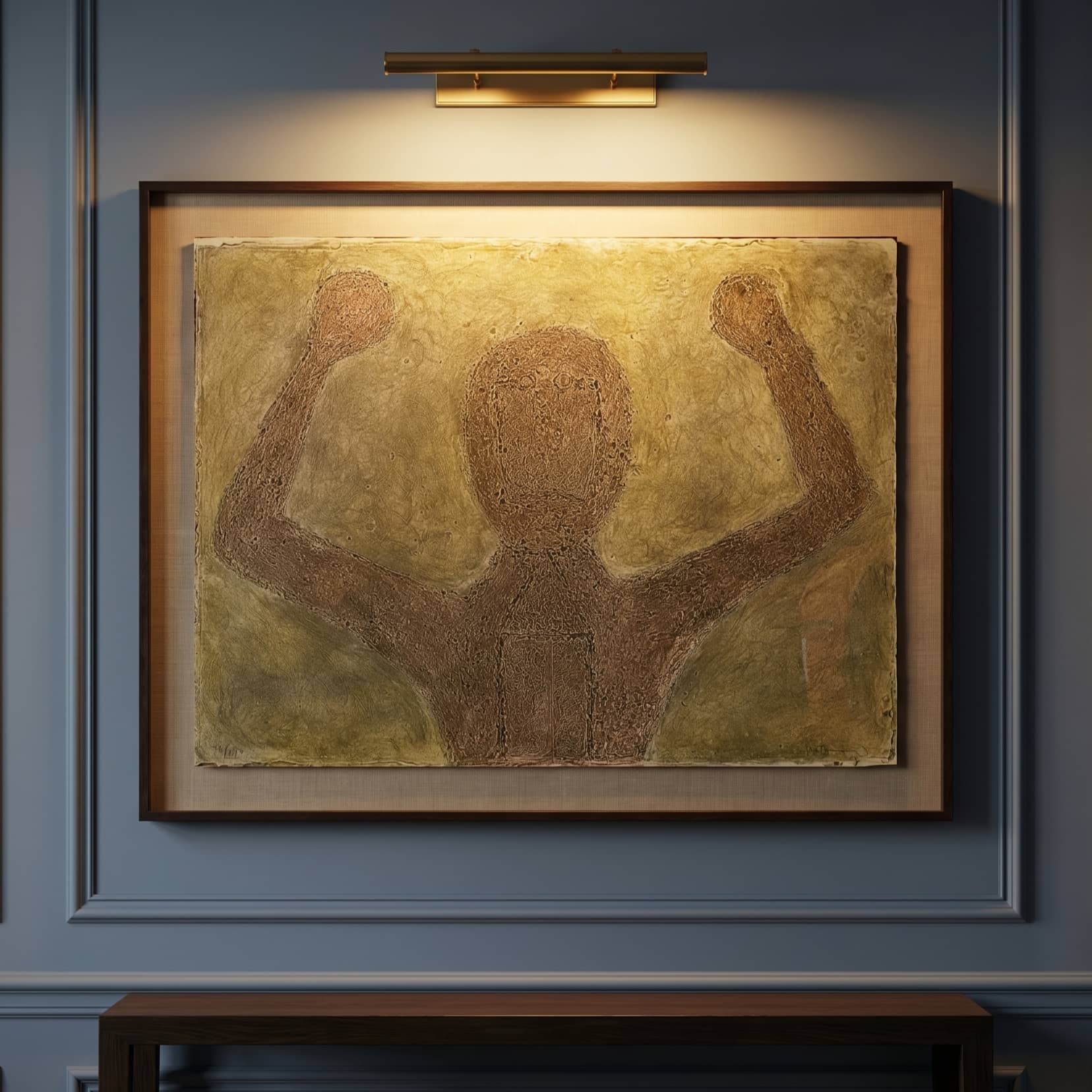
Rufino Tamayo
Rufino Tamayo (1899–1991) was one of the towering figures of 20th-century Mexican art, celebrated for paintings and lithographs that blended pre-Columbian imagery with European modernism in a distinctive, richly textured palette of earth tones, reds, and blues. His lithographs are actively traded at auction and appear regularly in serious Latin American art collections. Austin Auction Gallery sells and appraises Rufino Tamayo artwork.
What it's worth
Values vary with size, subject, medium, and condition—here's what comparable pieces bring at auction.
Our sold results
Auction results for Rufino Tamayo
Showing 2 results
Original Works
| Lot | Sold | Price realized |
|---|---|---|
| RUFINO TAMAYO (1899-1991) 'HOMBRE FRENTE AL CIELO' | Nov 2023 | $3,250 |
Prints & Giclées
| Lot | Sold | Price realized |
|---|---|---|
| RUFINO TAMAYO (1899-1991) LITHOGRAPH CABEZA EN VERDE | Feb 2025 | $2,500 |
Overview & history
Rufino Tamayo was born in Oaxaca, Mexico in 1899 to Zapotec parents, and his indigenous heritage remained a defining influence throughout his career, even as he distanced himself from the overtly political muralism of contemporaries Diego Rivera, David Alfaro Siqueiros, and José Clemente Orozco. Tamayo studied briefly at Mexico City's Academia de San Carlos before leaving to pursue an independent path, working for a time as head of the drawing department at the National Museum of Archaeology, where his close study of pre-Columbian art and artifacts shaped the formal vocabulary he would use for the rest of his career. Rejecting the didactic narrative content of the Mexican muralist movement, Tamayo pursued a more formalist and universal language, drawing on Cubism and European modernism while retaining unmistakably Mexican subject matter: watermelons and fruit, dogs, musicians, and figures rendered in a distinctive textured surface and an earthy palette of terracotta, ochre, deep red, and blue-black. He spent significant periods living in New York and Paris, which brought him into contact with the international art world and helped establish his reputation as a modernist independent of the muralist school, while his work remained deeply rooted in Mexican identity and pre-Hispanic visual tradition. Tamayo was enormously prolific in printmaking, particularly lithography and the mixografia technique he helped develop — a process combining printmaking with sculptural relief — and his graphic works, produced in limited editions throughout the 1970s and 1980s, are the works most commonly encountered at auction today. He died in Mexico City in 1991, and his paintings are held in major museum collections worldwide, including the Museum of Modern Art in New York and the Rufino Tamayo Museum in Mexico City, which he founded to house his own collection of international modern art.
Frequently asked
How do I sell my Rufino Tamayo?
Austin Auction Gallery offers free, no-obligation appraisals. Send a few photos and our specialists will tell you what it could bring at auction, then handle every step from cataloging through the sale.
What could your Rufino Tamayo bring at auction?
Our specialists provide free, no-obligation auction estimates. Send a few photos and we'll tell you what it could bring.