
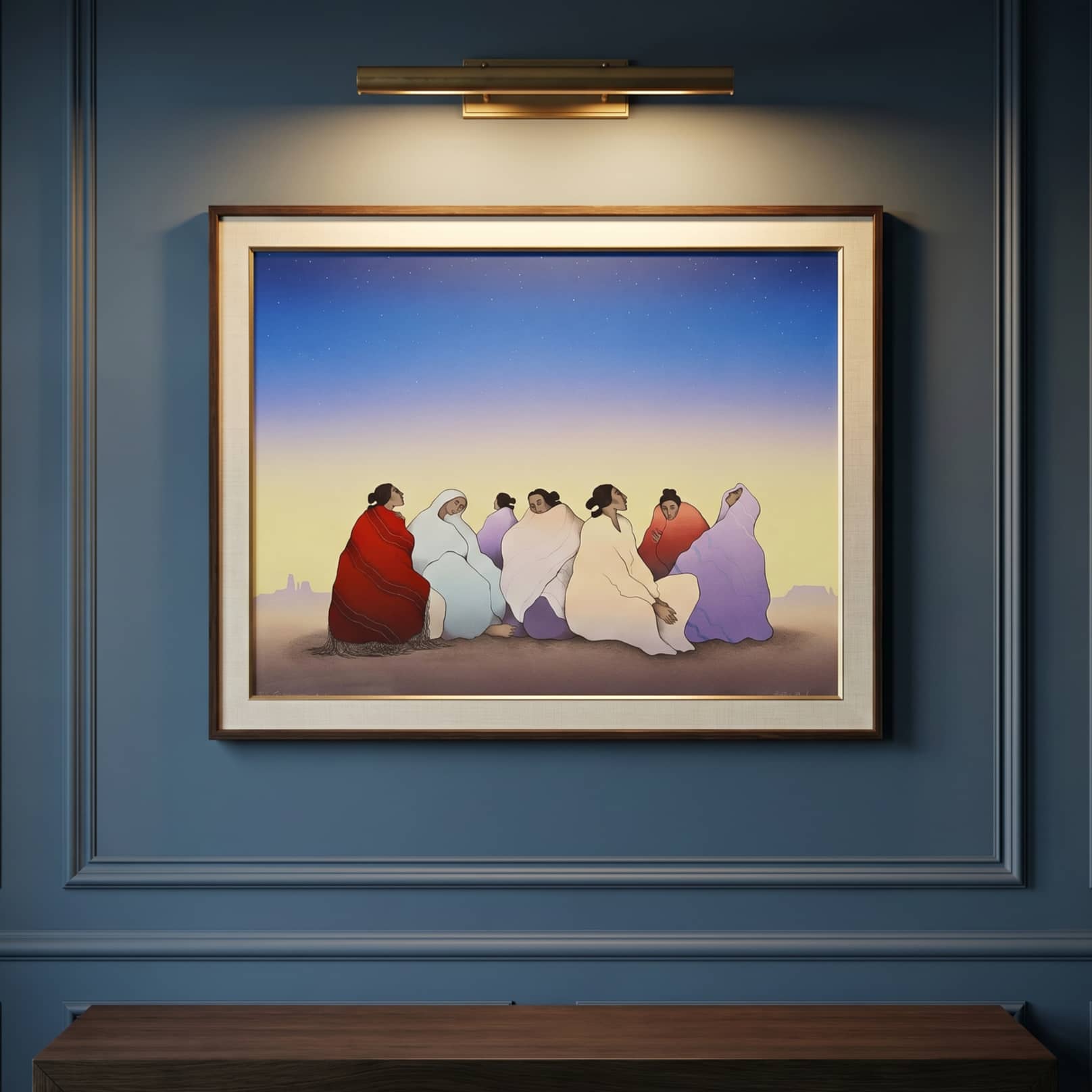
R.C. Gorman
R.C. Gorman (1931–2005) was a Navajo painter and printmaker often called the 'Picasso of American Indian Art,' celebrated for his monumental, sculptural depictions of Navajo women rendered in warm earth tones. His lithographs are among the most widely collected works of American Indian art. Austin Auction Gallery sells and appraises R.C. Gorman artwork.
What it's worth
Values vary with size, subject, medium, and condition—here's what comparable pieces bring at auction.
Our sold results
Auction results for R.C. Gorman
Showing 7 results
Original Works
| Lot | Sold | Price realized |
|---|---|---|
| R.C. GORMAN POTTERY VASE, 'THE JOKE - STATE II' | Jun 2022 | $250 |
Prints & Giclées
| Lot | Sold | Price realized |
|---|---|---|
| R.C. GORMAN (1931-2005) NAVAJO LITHOGRAPH 'MOONRISE' | Oct 2025 | $350 |
| (2) AFTER R.C. GORMAN (1932-2005) FRAMED OFFSET LITHOGRAPH PRINTS | Nov 2024 | $50 |
| (2) AFTER R.C. GORMAN (1932-2005) FRAMED OFFSET LITHOGRAPH PRINTS | Sep 2024 | $80 |
| R.C. GORMAN (D.2005) & ED MORGAN (D.2014) COLLABORATIVE BLIND EMBOSSED PRINT | Mar 2024 | $100 |
| R.C. GORMAN (1932-2005) LITHOGRAPH 'CRESCENT MOON' | Nov 2023 | $475 |
| R.C. GORMAN (1932-2005) 'CHITSA III' LITHOGRAPH | Jun 2022 | $800 |
Overview & history
Rudolph Carl Gorman was born in 1931 on the Navajo Nation reservation near Chinle, Arizona, the son of celebrated Navajo painter Carl Gorman. After serving in the U.S. Navy, he studied art briefly at Northern Arizona University before becoming, in 1958, the first Navajo person to receive a scholarship from the Navajo Tribal Council to study art abroad, spending time in Mexico City where he was influenced by the Mexican muralists — particularly the monumental, sculptural treatment of the human figure found in the work of Diego Rivera. Gorman settled in Taos, New Mexico in the 1960s and became the central figure of the Taos art scene, opening his own gallery — the first Native American-owned gallery in Taos — in 1968. His signature subject, repeated across thousands of works over his career, is the Navajo woman: monumental, simplified, sculptural figures often wrapped in traditional blankets, rendered in warm terracotta, ochre, and earth-tone palettes that echo the landscape of the American Southwest. His confident, rounded line and emphasis on volume earned him the nickname 'the Picasso of American Indian art' during his lifetime. Enormously prolific and commercially successful, Gorman produced extensively in lithography alongside his paintings, and his prints brought his instantly recognizable style to a broad national collector base well beyond the Southwest. He died in 2005 in Albuquerque, New Mexico, and his work remains a cornerstone of American Indian art collections, with his Taos gallery estate continuing to represent his legacy.
Frequently asked
How do I sell my R.C. Gorman?
Austin Auction Gallery offers free, no-obligation appraisals. Send a few photos and our specialists will tell you what it could bring at auction, then handle every step from cataloging through the sale.
What could your R.C. Gorman bring at auction?
Our specialists provide free, no-obligation auction estimates. Send a few photos and we'll tell you what it could bring.