
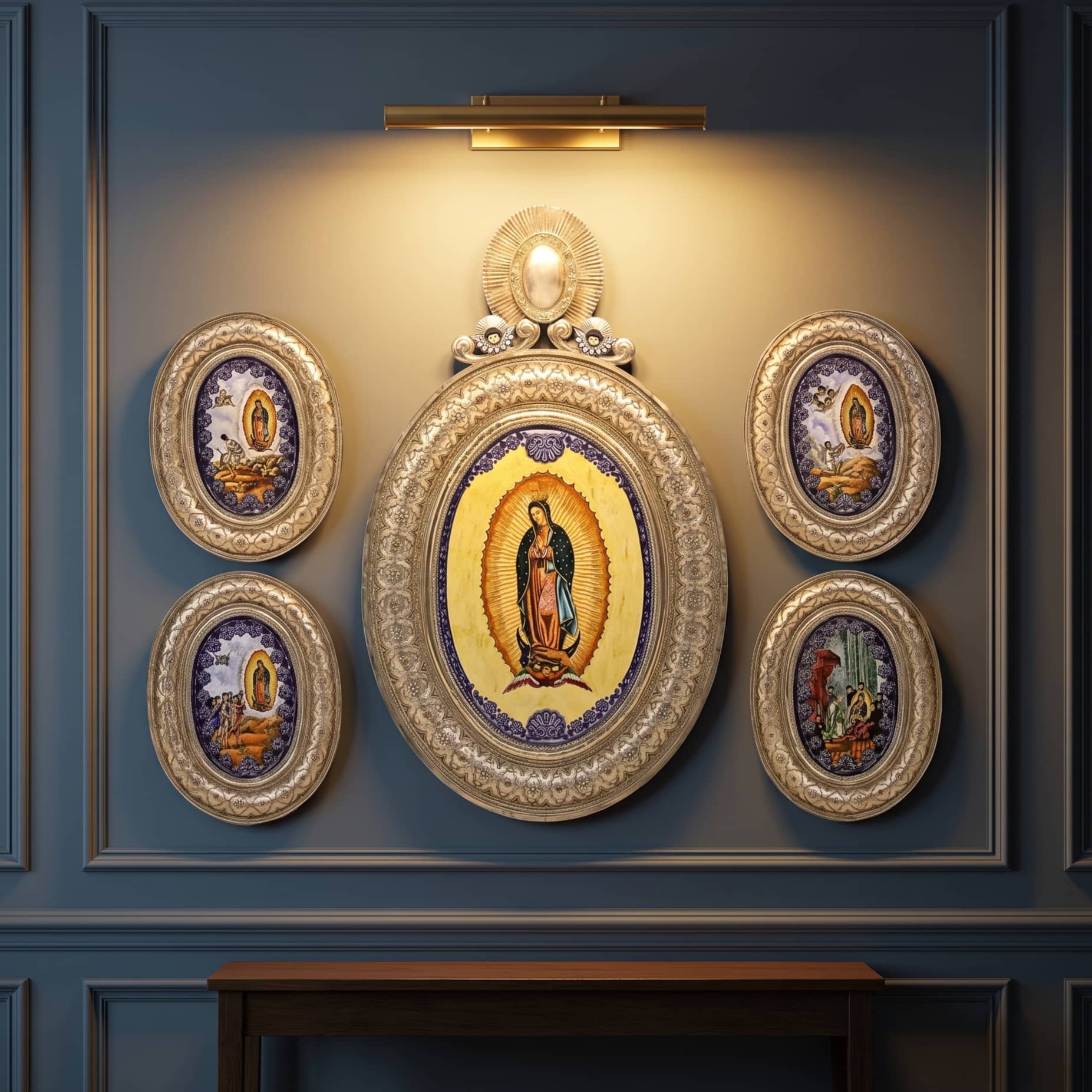
Mexican Devotional Art
Mexican devotional art (arte popular) encompasses the rich tradition of handmade devotional, decorative, and ceremonial objects produced across Mexico's regions and indigenous communities — from Huichol yarn paintings and amate bark paper works to santos, milagro crosses, and fotoescultura portraits. Austin Auction Gallery regularly sells Mexican folk art from Texas estates with deep collecting ties to Mexico.
What it's worth
Values vary with size, subject, medium, and condition—here's what comparable pieces bring at auction.
Our sold results
Auction results for Mexican Devotional Art
No results sold in this period—try a wider range.
Overview & history
Mexican devotional art is not the product of a single artist or workshop but of an enormously diverse set of regional and indigenous traditions that have continued, largely unbroken, for centuries. The category spans devotional objects (santos — carved and painted saints; retablos — small devotional paintings on tin; milagro crosses adorned with miniature charms representing prayers for healing), textile and paper arts (amate bark paper paintings from Guerrero, often depicting village scenes and nature in bright, flat color), and the studio and gallery-adjacent folk traditions that emerged in the 20th century as Mexican folk art gained international collector recognition, including fotoescultura — carved wooden portrait busts built around a photographic image of the subject's face, a distinctly Mexican funerary and commemorative tradition. The most internationally recognized folk art tradition within this category is Huichol yarn painting, produced by the indigenous Wixárika (Huichol) people of the Sierra Madre Occidental in the states of Jalisco, Nayarit, Zacatecas, and Durango. Traditional Huichol yarn paintings depict visionary, symmetrical compositions — deer, peyote, eagles, and ceremonial symbols drawn from Huichol cosmology and shamanic practice — created by pressing colored yarn into a beeswax-coated board, a technique adapted in the mid-20th century from ceremonial votive objects into a fine-art form for the international market. Individual named Huichol artists, including Rosendo de la Cruz Navarette and the Carrillo family of artists, are recognized and collected specifically by name within this tradition, much like painters working in any other fine art category. Mexican folk art has been embraced by serious collectors since the early 20th century, when figures like Nelson Rockefeller and Diego Rivera himself championed the category as a fine art tradition in its own right rather than mere craft or souvenir. Today it occupies a distinct and actively traded position in the American Southwest and Texas art markets, where multi-generational collecting ties to Mexico are common.
Frequently asked
How do I sell my Mexican Devotional Art?
Austin Auction Gallery offers free, no-obligation appraisals. Send a few photos and our specialists will tell you what it could bring at auction, then handle every step from cataloging through the sale.
What could your Mexican Devotional Art bring at auction?
Our specialists provide free, no-obligation auction estimates. Send a few photos and we'll tell you what it could bring.