
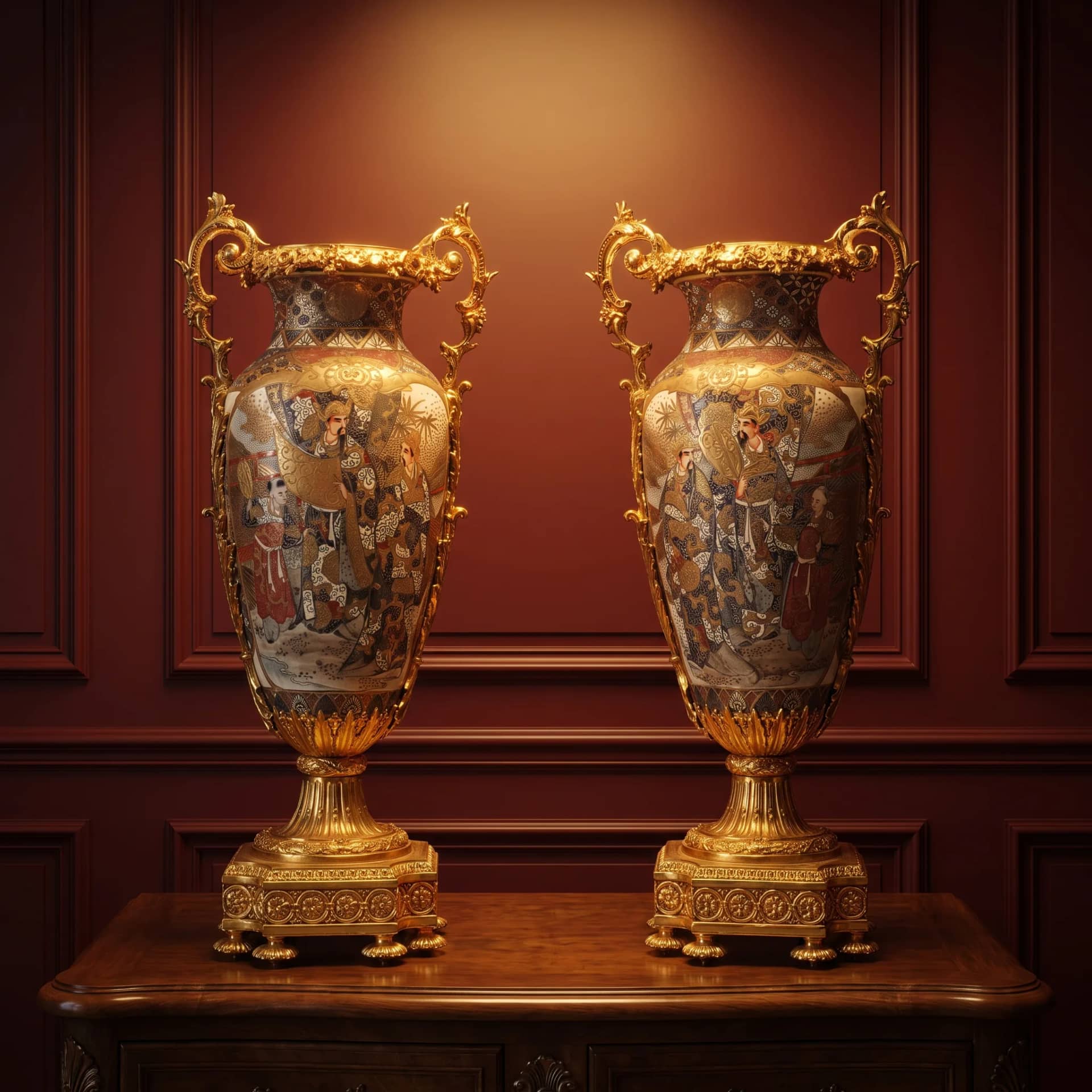
Satsuma
Satsuma is a richly decorated Japanese earthenware prized for its warm crackle glaze, intricate hand-painting, and raised gold (moriage) detail. From fine Meiji-period masterworks to later decorative wares, it remains a collector favorite. Austin Auction Gallery sells and appraises Satsuma.
What it's worth
Value depends on age, artist, and refinement. Later decorative pieces typically bring modest sums, while finely painted, signed Meiji-era works by noted studios can reach the thousands or far higher. Condition and quality of the painting matter most.
Our sold results
Auction results for Satsuma
 (2) JAPANESE YABU MEIZAN SATSUMA EARTHENWARE JARS$4,250Aug 2016
 ANTIQUE JAPANESE MANNER OF MEIZAN SATSUMA MOON VASE$2,250Aug 2016
 LARGE JAPANESE MEIJI SATSUMA EARTHENWARE VASE$1,300May 2018
Showing 26 results
Auction Results
Overview & history
Satsuma ware originated in Japan's Satsuma province in the early 17th century and reached its artistic peak during the Meiji period (1868–1912), when finely painted figural, landscape, and floral scenes were produced for export to the West. Quality ranges enormously — from museum-grade pieces by named studios such as Kinkozan and Yabu Meizan to mass-produced 'Satsuma style' wares made well into the 20th century. Authentic antique Satsuma shows hand-painted detail, a soft crackled cream glaze, and gilt enrichment, and is highly collectible among enthusiasts of Japanese export art.
Identifying & marks
Look on the base for the Shimazu family crest (a cross within a circle), often with a signature in Japanese characters naming the studio or artist. Be cautious of unmarked or crudely painted later wares sold as antique.
Frequently asked
What should I look for on the base to identify genuine Satsuma?
Look for the Shimazu family crest — a cross within a circle — often accompanied by a signature in Japanese characters naming the decorating studio or artist (Kinkozan and Yabu Meizan are among the most celebrated names). Be cautious of pieces with crude, heavy painting sold as antique; genuine fine Satsuma shows delicate, detailed brushwork and a soft, evenly crackled cream glaze.
Does every Satsuma piece date to the Meiji period?
No. Satsuma ware originated in the early 17th century, reached its artistic peak during the Meiji period (1868–1912) when the finest export pieces were made, and continued to be produced — in steadily declining quality — well into the 20th century. Many pieces on the market today are later 'Satsuma style' decorative wares rather than genuine Meiji-era pieces, which is why quality of painting matters more than age assumptions.
What is my Satsuma piece worth?
Later decorative pieces typically bring modest sums, generally $75–$500. Finely painted, signed Meiji-era works by noted studios can reach the thousands or considerably more, depending on the complexity of the scene and the reputation of the studio or artist. Condition and the quality of the painting are the two biggest factors.
What could your Satsuma bring at auction?
Our specialists provide free, no-obligation auction estimates. Send a few photos and we'll tell you what it could bring.